Why Humidity Is Hard on Floors
Singapore averages 80% relative humidity for most of the year, with frequent rain and constant air-conditioning indoors. That combination creates a cycle that most flooring materials were not designed for.
Moisture in the air causes timber to swell; air-conditioning then dries it out and causes it to shrink. Over repeated cycles, parquet strips cup, gap and squeak. Stone floors do not warp, but constant dampness encourages mould in grout and joints, and can stain porous surfaces. Even tile and terrazzo suffer as moisture seeps into cement-based substrates.
The good news is that a handful of consistent habits make a very large difference.
Daily Habits That Protect Every Floor Type
- Use entrance mats — inside and outside. Sand and grit tracked indoors is the single biggest cause of surface scratches.
- Go shoeless indoors — or keep dedicated indoor slippers. It reduces abrasion dramatically.
- Sweep or vacuum daily — before any wet cleaning. Never mop over loose grit.
- Wipe spills immediately — especially wine, oil, citrus, sauces and shampoo.
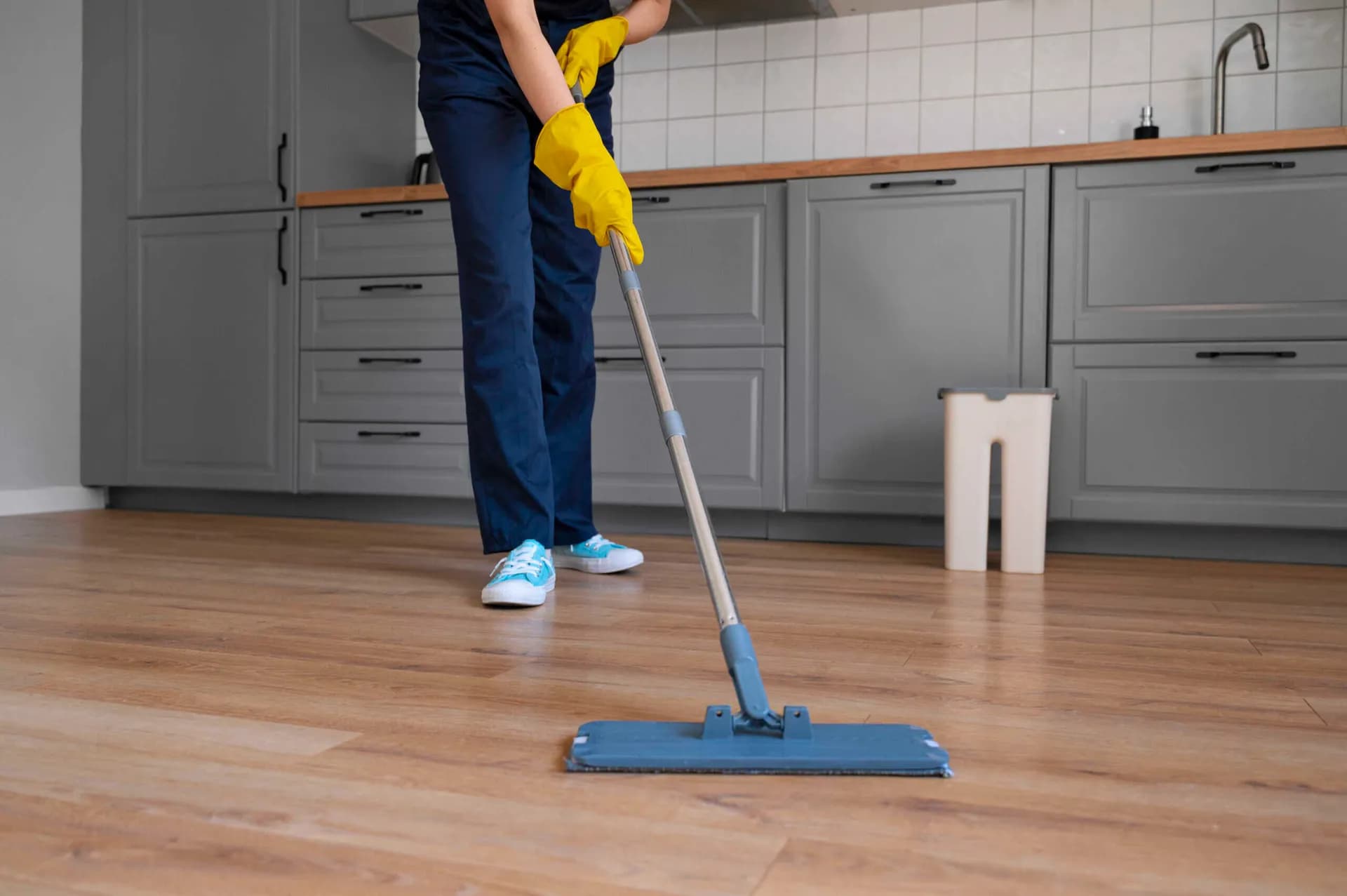
- Use the dampest mop, not the wettest — a well-wrung microfibre mop is ideal.
- Keep doors open or run exhaust fans in bathrooms to reduce trapped moisture.
Managing Indoor Humidity
- Run the air-conditioner at a moderate setting rather than extreme cold — large temperature swings stress timber floors
- Use a dehumidifier in bedrooms and storage rooms during the wet season
- Keep indoor humidity roughly between 45% and 60% if you can measure it
- Avoid placing potted plants directly on timber or porous stone — use a tray
- Fix leaking pipes, dripping taps and air-conditioner condensation promptly
- Wipe down windows and window tracks after heavy rain to prevent water pooling
Floor-Specific Care
Marble
- Use only pH-neutral stone cleaner — never vinegar, bleach or acidic bathroom spray
- Blot spills, do not wipe them around the surface
- Use felt pads under furniture and coasters under drinks
- Re-seal every 12 to 18 months in high-traffic areas
- Polish professionally every 2 to 3 years
Granite
- Routine sweeping and pH-neutral mopping is usually enough
- Avoid acidic cleaners, which can dull the polished surface over time
- Re-seal every 2 to 3 years depending on use
- Polishing is needed less frequently than marble — every 3 to 5 years
Terrazzo
- Sealing is essential; re-seal every 12 to 24 months
- Clean with pH-neutral products to protect both the chips and the binder
- Use mats at entrances to reduce scratching
- Grinding and re-polishing can revive badly worn sections
Parquet and Timber
- Never use a wet mop or steam mop — moisture is the enemy of timber
- Use a slightly damp microfibre mop and dry immediately
- Keep furniture pads on all legs and lift rather than drag
- Maintain stable indoor humidity; air-conditioning helps but avoid blowing directly onto the floor
- Re-coat with varnish every 3 to 5 years before the wood is exposed
Tile and Grout
- Dry the bathroom floor after use if possible
- Squeegee shower walls to prevent soap scum and limescale
- Clean grout weekly with a soft brush
- Re-seal grout every 12 to 24 months
- Replace mouldy silicone rather than repeatedly bleaching it
Monthly and Yearly Maintenance Calendar
- Weekly: deep clean grout lines, check for new scratches or stains, vacuum under movable furniture
- Monthly: inspect sealant and joints, check for water marks near windows and air-conditioners, move rugs slightly to let the floor breathe
- Every 6 months: professional inspection of high-traffic areas, spot polishing if needed
- Every 12 to 18 months: re-seal stone and grout
- Every 2 to 5 years: full professional polishing or re-varnishing depending on material and traffic
Common Mistakes That Age Floors Fast
- Using one all-purpose cleaner on every surface
- Steam-mopping timber or laminate
- Letting water sit on stone or grout
- Dragging furniture instead of lifting it
- Using abrasive powders or metal scourers
- Leaving wet shoes and umbrellas on the floor
- Ignoring a small stain until it becomes permanent
- Delaying polishing until the surface damage reaches the substrate
When to Call a Professional
Book a professional service when you notice:
- Dullness that no cleaning product fixes
- Visible scratches across a wide area
- Stains that have been present for more than a few days
- Water damage or cupping in timber
- Mould that returns within weeks of cleaning
- Grout that stays dark even after scrubbing
Early intervention is almost always cheaper than waiting.
Frequently Asked Questions
Can I use a steam mop on my floors?
Only on sealed tile and some stone. Never use a steam mop on parquet, laminate or engineered timber — the heat and moisture damage the joints.
How often should I mop?
Two to three times a week for homes with children or pets; once or twice a week for smaller households. Always sweep or vacuum first.
Does air-conditioning damage floors?
Not directly, but rapid drying after humid periods can cause timber to shrink and gap. Moderate, consistent settings are best.
What is the best all-purpose floor cleaner?
A pH-neutral cleaner diluted as directed. It is safe for stone, tile, sealed timber and most vinyl surfaces.
Professional Floor Care in Singapore
Tuhfa Construction Pte Ltd polishes and restores marble, granite, terrazzo, tile, parquet and timber floors across Singapore — with free assessments and honest advice on what your floor actually needs.
Call or WhatsApp +65 8576 6635, or email Tuhfa.construction@gmail.com.