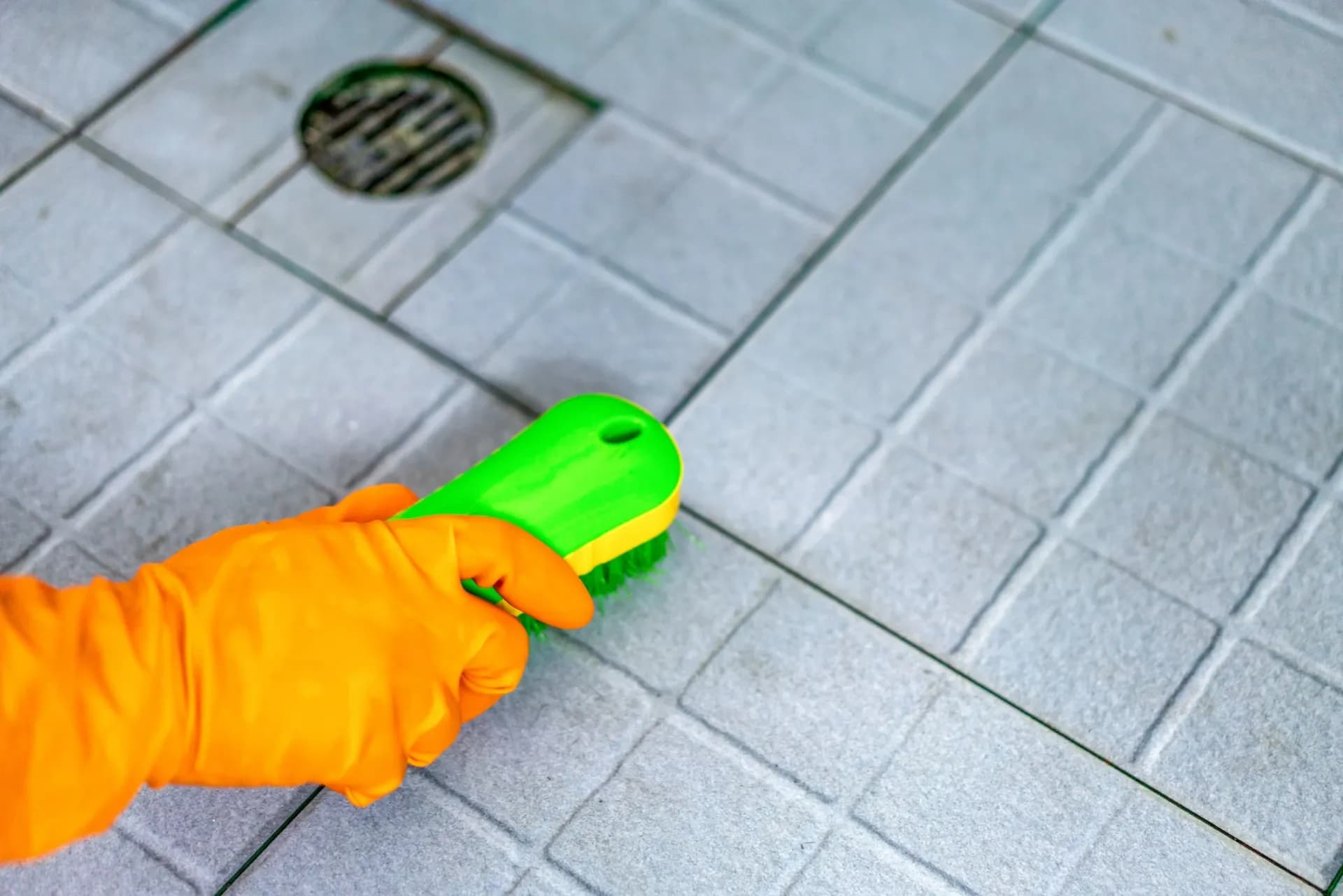
Why Singapore Tiles Get Dirty So Quickly
Singapore's climate is a perfect storm for tile and grout problems. Year-round humidity above 80%, frequent wet areas, and air-conditioning condensation create ideal conditions for mould and mildew. Add hard water from regular tap use and you get a bathroom that starts looking tired within a couple of years.
The good news is that most tile and grout staining is reversible. It just needs the right method.
The Four Main Types of Tile Staining
1. Mould and Mildew
Black or dark grey spots along grout lines, silicone joints and corners. Most common in bathrooms, kitchens and service yards. Mould roots grow into the porous grout, so surface wiping only removes the visible part.
2. Hard Water and Limescale
White, chalky or cloudy deposits around taps, showerheads and floor traps. Caused by mineral content in water drying on the surface. Limescale bonds strongly to tile and glass and needs an acidic descaler to dissolve.
3. Soap Scum
A dull, greasy film on shower walls and glass panels. It is a mixture of soap residue, body oils and minerals. Alkaline cleaners work better than acidic ones for this type of soil.
4. Grout Haze and Discolouration
A powdery white film left after tiling works, or a gradual darkening of grout lines as dirt and grease accumulate. This is the most common complaint in newly renovated homes.
How to Tell What You Are Dealing With
- Black or green spots, musty smell → mould
- White chalky build-up, worst near taps → limescale
- Grey, greasy film that smears → soap scum
- Uniform white powder across the floor → grout haze
- Dark grout lines that stay dark after mopping → embedded dirt and grease
What Actually Works
For Mould
- Apply a dedicated anti-mould gel and leave it to dwell — do not scrub immediately
- Use a grout brush rather than a sponge so you reach into the pores
- Rinse thoroughly and dry the area completely
- Replace failed silicone instead of trying to bleach it white
- Improve ventilation — run the exhaust fan during and after showers
For Limescale
- Use an acidic descaler designed for bathroom surfaces
- Let it dwell for several minutes so it dissolves rather than abrades
- Never use acid on marble, travertine or other calcium-based stone — it will etch permanently
- For glass panels, a squeegee after every shower prevents most build-up
For Soap Scum
- Use an alkaline degreaser or a paste of baking soda
- Work in sections and let the product sit before wiping
- A non-scratch pad helps, but avoid abrasive powders on polished tiles
For Grout Haze
- Use a purpose-made grout haze remover
- Do not scrub aggressively — haze sits on the surface, it does not need force
- On newly tiled floors, haze removal is part of proper post-renovation cleaning
What NOT to Do
- Do not mix bleach and acid cleaners — this releases toxic chlorine gas
- Do not use metal scourers — they scratch glaze permanently
- Do not use acid on natural stone — it destroys the polished surface
- Do not steam-mop timber or laminate — moisture damages the joints
- Do not leave bleach gel on grout for hours — it weakens the cement
- Do not ignore ventilation — mould will return within weeks
Professional Tile and Grout Restoration
When cleaning alone is not enough, professional restoration can bring tiles and grout back to a near-new condition.
- High-pressure deep cleaning lifts embedded dirt from grout pores
- Grout re-colouring restores dark, stained grout lines to a uniform colour
- Grout sealing slows down future staining and makes cleaning easier
- Tile polishing removes surface scratches and dullness from porcelain and homogeneous tiles
- Silicone replacement removes mouldy joints and replaces them with fresh, mould-resistant sealant
Preventing Grout Staining Long Term
- Squeegee shower walls after every use
- Run the exhaust fan for 15 minutes after a shower
- Wipe up oil and sauce spills in the kitchen immediately
- Use a pH-neutral cleaner for routine mopping
- Re-seal grout every 12 to 24 months
- Fix leaking taps and pipes — constant moisture is what feeds mould
- Leave the bathroom door open when not in use to improve airflow
- Clean grout lines weekly with a soft brush, not monthly with bleach
Frequently Asked Questions
Can black mould in grout be removed permanently?
Surface mould can be removed, but if the roots have penetrated deep into the grout, the most reliable fix is to scrape out and re-grout that section. Improving ventilation prevents it from returning.
Is it safe to use bleach on grout?
Diluted bleach can be used occasionally, but frequent use weakens cement-based grout. A dedicated anti-mould product is a better long-term choice.
Can scratched tiles be polished out?
Porcelain and homogeneous tiles can often be polished to remove light scratches and restore shine. Deep chips usually need replacement instead.
How often should grout be sealed?
Every 12 to 24 months for bathrooms and kitchens, depending on use and the product used.
Restore Your Tiles and Grout in Singapore
Tuhfa Construction Pte Ltd provides tile and grout deep cleaning, grout re-colouring, sealing and tile polishing for homes and commercial spaces across Singapore. Free site assessment and itemised quotation.
Call or WhatsApp +65 8576 6635, or email Tuhfa.construction@gmail.com.